

You're in your hotel room, taking a quick vape break, when suddenly the fire alarm starts blaring. Sound familiar? Here's the truth: yes, vapes can absolutely set off fire alarms, but it's not a sure thing every time. The key factors are the type of detector overhead, how much vapor you're producing, and where you're doing it. Let's break down the science so you know what you're dealing with.
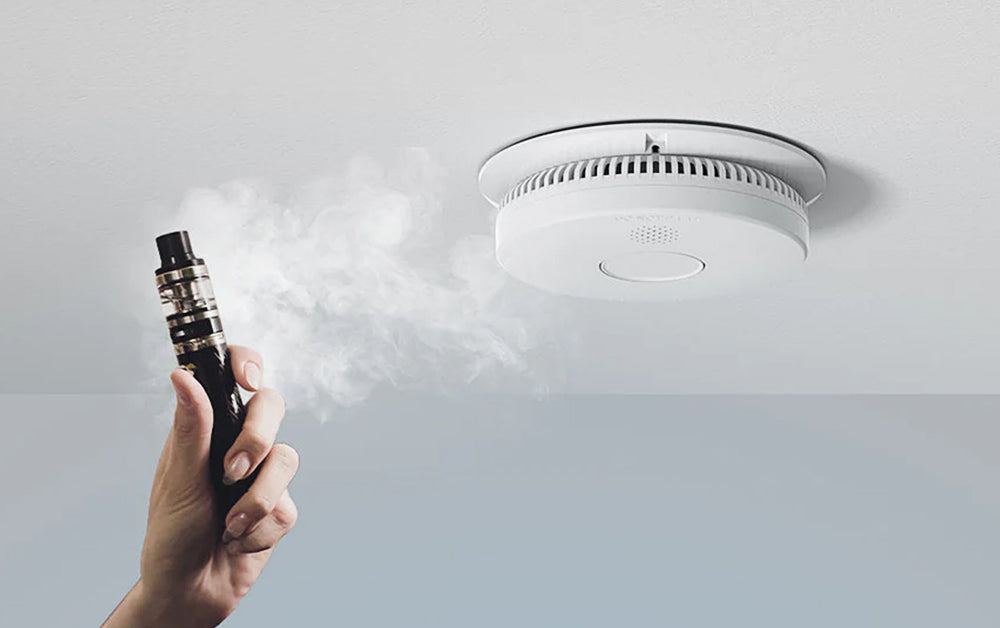
Do Vapes Set Off Smoke Alarms?
The short answer is yes, but it's complicated. Not all smoke alarms work the same way, and that matters more than you'd think.
How Alarm Systems Actually Work
Most buildings use one of two main types of detectors (sometimes alongside dual-sensor or multi-criteria models).
- The first kind, ionization alarms, has a tiny amount of radioactive material inside that creates an electrical current. When smoke particles enter the chamber, they disrupt this current and trigger the alarm. These are super sensitive to fast-burning fires with smaller particles.
- The second type, photoelectric alarms, uses a light beam and a sensor. When smoke enters the chamber, it scatters the light onto the sensor, setting off the alarm. These work better for slow, smoldering fires that produce larger particles.
Why Ionization and Photoelectric Matter
Here's where it gets interesting for vapers. Photoelectric detectors can be more likely to catch your clouds. The vapor from e-cigarettes contains tiny droplets of propylene glycol and vegetable glycerin, and these droplets scatter light just like smoke does.
Ionization alarms may be less likely to react to light vapor than combustion smoke, but they can still trigger, especially when the aerosol concentration gets high enough.
That said, if you're blowing massive clouds in a small bathroom, even an ionization alarm might go off. The sheer volume of particles in the air can eventually trigger it.
What Increases Your Risk
A few things make false alarms more likely.
- First, room size matters big time. A tiny hotel bathroom fills up with vapor way faster than a living room.
- Second, your device settings play a role—high-wattage mods produce thicker clouds than basic pod systems.
- Third, how close you are to the detector is obvious but worth mentioning.
Exhaling directly toward the ceiling is basically asking for trouble.
What Makes Vapes Trigger Fire Alarms?
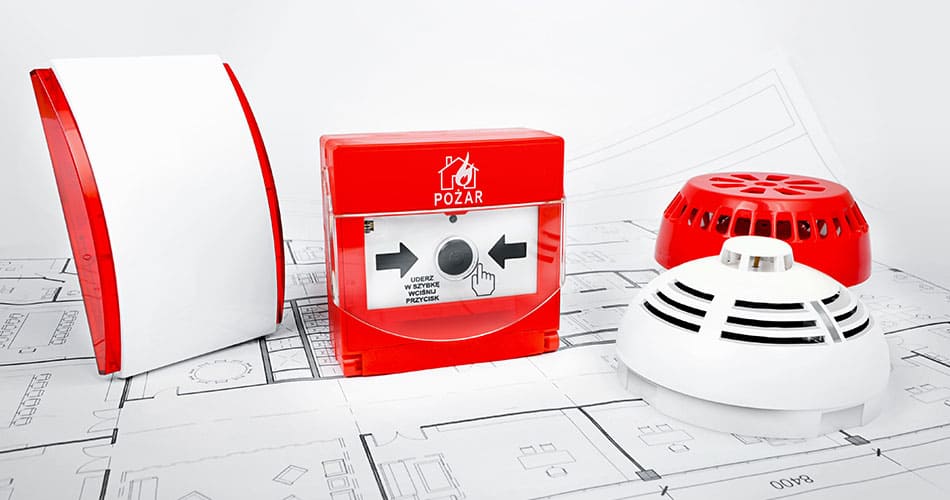
Understanding why alarms go off helps you avoid setting them off in the first place.
Vapor Density and Cloud Production
The amount of vapor you produce directly affects your chances of triggering an alarm. Sub-ohm devices and high-VG liquids create dense, billowing clouds that linger in the air longer. These thick clouds contain enough suspended particles to fool photoelectric sensors into thinking there's smoke present.
How Air Movement Changes Everything
Ventilation is your best friend here. In a room with good airflow, vapor dissipates quickly and never reaches concentrations high enough to trigger alarms. But in a sealed room with no windows or air circulation, vapor just sits there, building up until it hits that critical threshold.
This is why you'll rarely set off alarms outdoors or in well-ventilated spaces, but bathrooms with the door closed are a different story entirely.
Distance From the Detector
Physics is pretty straightforward here. The farther away you are from the detector, the more the vapor disperses before reaching it. If you're standing directly underneath a ceiling-mounted alarm and blowing clouds upward, you're basically delivering particles straight to the sensor. Move to the other side of the room, and those same clouds might dissipate enough to stay under the detection threshold.
Can Smoke Detectors Detect Vape in Different Settings?
![Do Vapes Set Off Smoke Alarms? [Clear Answer] | Grey Haze UK](https://greyhaze.co.uk/cdn/shop/articles/Main_Banner_1_1200x630_crop_center.jpg?v=1764847463)
Not all locations are created equal when it comes to fire safety systems.
Home Smoke Alarms
Your typical residential smoke alarm is usually a standalone photoelectric or ionization unit. These are moderately sensitive, designed to catch real fires without going off constantly from cooking smoke. You can probably vape in a normal-sized room without issues if you're not going crazy with it. Just don't do it right under the detector.
Commercial Buildings and Hotels
Hotels are a whole different ballgame. Many use interconnected alarm systems that are more sensitive because they need to protect hundreds of people. Some newer hotels even have multi-sensor detectors that measure both particles and heat. These are harder to trick because they're looking for multiple signs of fire simultaneously.
Getting caught setting off a hotel fire alarm isn't just embarrassing—it can cost you money. False alarm fees can run hundreds of dollars (and sometimes more), plus you might get kicked out.
Airplanes and Public Transit
Airplane bathrooms have very sensitive smoke detectors, and they're required by law. These systems are designed to catch fires in their earliest stages because you're around 30,000–40,000 feet in the air. Vaping on a plane is prohibited by airlines and banned in many places, and smoke detectors are designed to detect problems early—so it’s a high-risk move. Many trains and buses also prohibit vaping—don't risk it.
How Can You Vape Without Setting Off Smoke Alarms?

If you need to vape indoors, there are smarter ways to do it. Only do this where vaping is allowed, and never cover, disable, or tamper with any detector.
Pick Your Spot Carefully
Choose rooms with windows you can open. Crack a window and position yourself near it so vapor flows outside instead of pooling near the ceiling. Larger rooms give vapor more space to disperse. Avoid small, enclosed spaces like bathrooms unless you've got excellent ventilation going.
Control Your Cloud Output
You don't always need to blow huge clouds. Lower your wattage, use higher-nicotine liquids so you need fewer puffs, or switch to a mouth-to-lung device instead of direct-lung. Smaller, less dense clouds are way less likely to trigger alarms. If you’re shopping for a lower-cloud style, compact MTL pod systems like the Vaporesso XROS line (including newer XROS 5 models) are designed for that tighter draw approach.
You can also exhale downward or into fabric like a towel, which captures some of the vapor particles. And if you use a pod platform with multiple resistance options (like XROS pods), choosing a tighter, lower-output setup can help reduce visible vapor compared to wide-open DTL airflow.
Improve Air Circulation
Turn on bathroom fans before you start. Point a regular fan toward an open window. Even just opening a door to create cross-ventilation helps tremendously. The goal is to keep vapor from accumulating in one spot, especially near the ceiling where detectors live.
3 FAQs about Vaping and Smoke Alarms
Q1. Can Smoke Detectors Tell the Difference Between Vape Clouds and Actual Smoke?
Not really. Modern smoke detectors respond to particle concentration in the air, and they can't distinguish between vapor droplets and smoke particles. Both scatter light in photoelectric sensors and can disrupt ionization chambers if the concentration is high enough. Some advanced multi-sensor detectors might be better at this because they also measure heat and other factors, but standard residential and commercial alarms just react to whatever particles they detect. The detector's job is to err on the side of caution, so if it senses something that might be smoke, it goes off.
Q2. Will Using a Lower VG Ratio in My Vape Juice Help Avoid Setting off Alarms?
It can help, but it's not a magic solution. Higher PG liquids produce a thinner vapor that dissipates faster than high VG liquids. This means less visible cloud and fewer suspended particles in the air, which reduces your chances of triggering a photoelectric detector. However, if you're in a small, enclosed space with poor ventilation, even thin vapor can build up over time. The ratio makes a difference, but it's just one factor among many, including room size, ventilation, and how much you're vaping.
Q3. Are There Any Legal Consequences for Setting off Fire Alarms With Vape Clouds?
Yes, potentially. In hotels, you could face false alarm fees that are often hundreds of dollars, and in some jurisdictions, can be higher, depending on local fire department policies and hotel rules. If emergency services respond, you're usually responsible for those costs. In some jurisdictions, repeatedly triggering false alarms can result in fines. On airplanes, vaping is federally prohibited in the US with fines that can reach several thousand dollars, and intentionally triggering aircraft smoke detectors could lead to more serious charges. Even in private buildings, if your vaping causes evacuation or emergency response, property owners might pursue damages.
Conclusion
Yes, vapes can set off fire alarms—especially photoelectric ones in small spaces with poor airflow. But now you know how to minimize the risk. Choose your location wisely, control your cloud production, and keep air moving.


